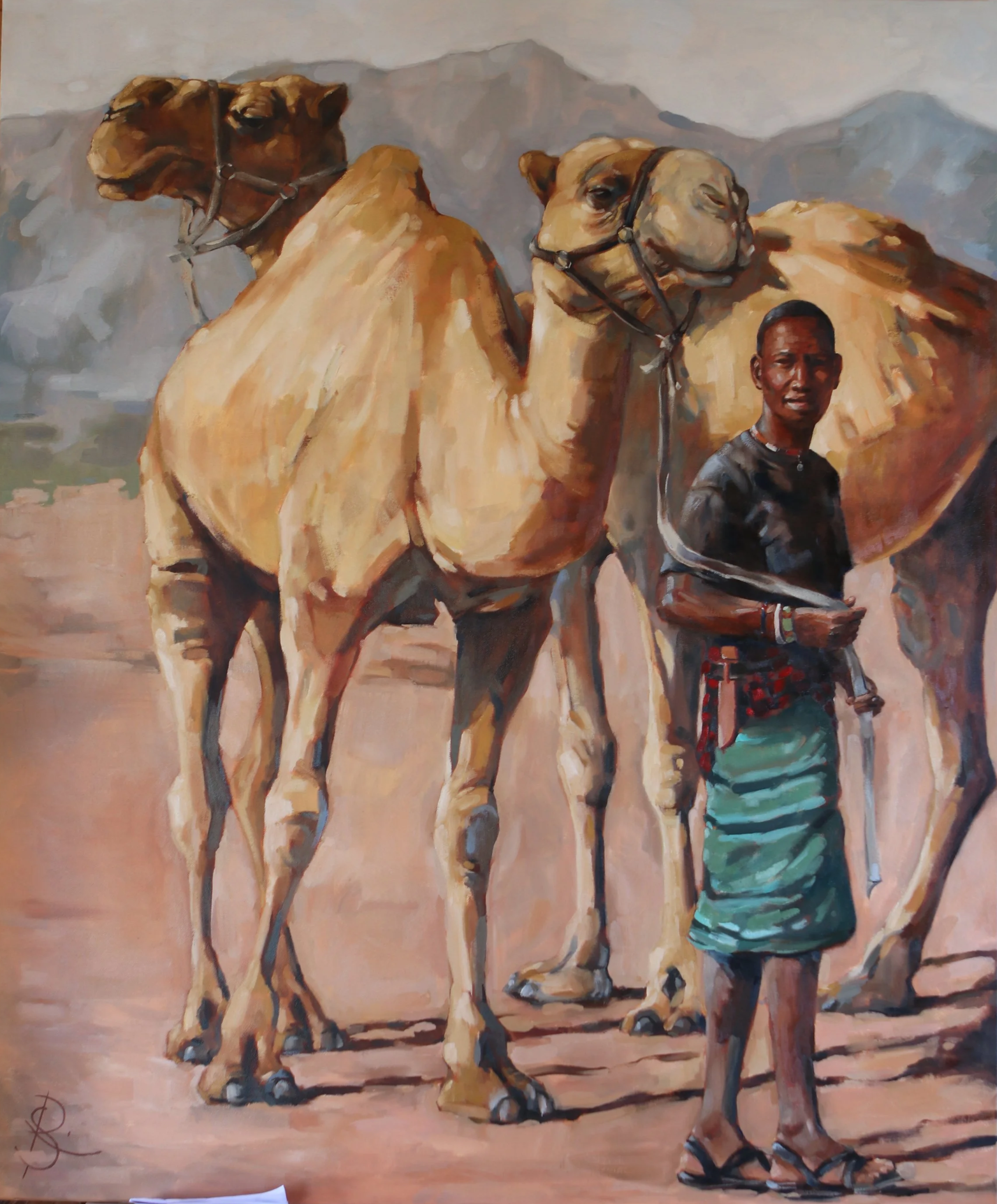
A Camel Commission in Kenya
I was in Laikipia for an artist residency when a client got in touch for an unusual and very exciting commission request. Soon, I was driving further north, into the more open, arid northern area of the Kenyan county, with my sketchbook and camera.
As I approached Tumaren, I noticed a shift in environment and species. The greener hills I came from were bustling with ‘helmeted’ guinea fowl, where here their more desert hardy cousins, the ‘vulturine’ thrived.
Similarly, the slender and graceful Gerenuk, or ‘Swala Twiga’ (antelope giraffe) numbers increased as the more grass dependant Grant gazelle and impala numbers lessened. The waterhole attracted Grevy’s zebra, as well as the Burchell’s and reticulated giraffe. Elephants roamed but in much smaller numbers.
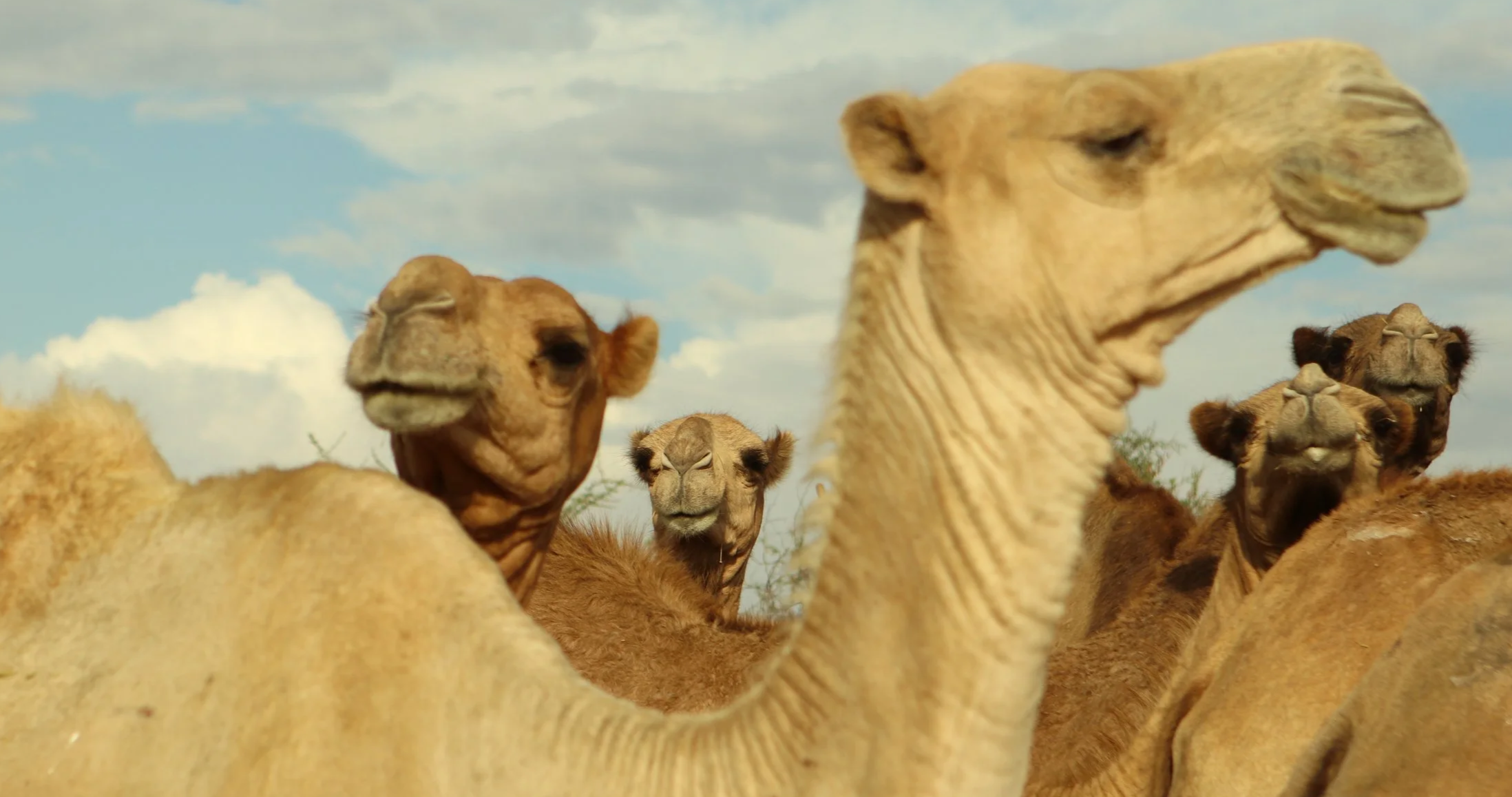
This breath-taking but harsh landscape selects which species can thrive and takes no passengers. There are few animals better adapted to the dry and heat than the camel. Used increasingly by local communities as a hardier livestock alternative to cattle. They are also used on walking safaris to carry equipment, meaning travelling through the wilderness free of engines.
My client had spent a lot of time at Karisia Walking Safari in Tumaren, and it holds a special place in him. Having previously bought a 100x120 wild dogs painting, he wanted a painting to match the dimensions and to capture the camels with their handlers.
The brief was relaxed and though we discussed some ideas, I was trusted with pretty free reigns!
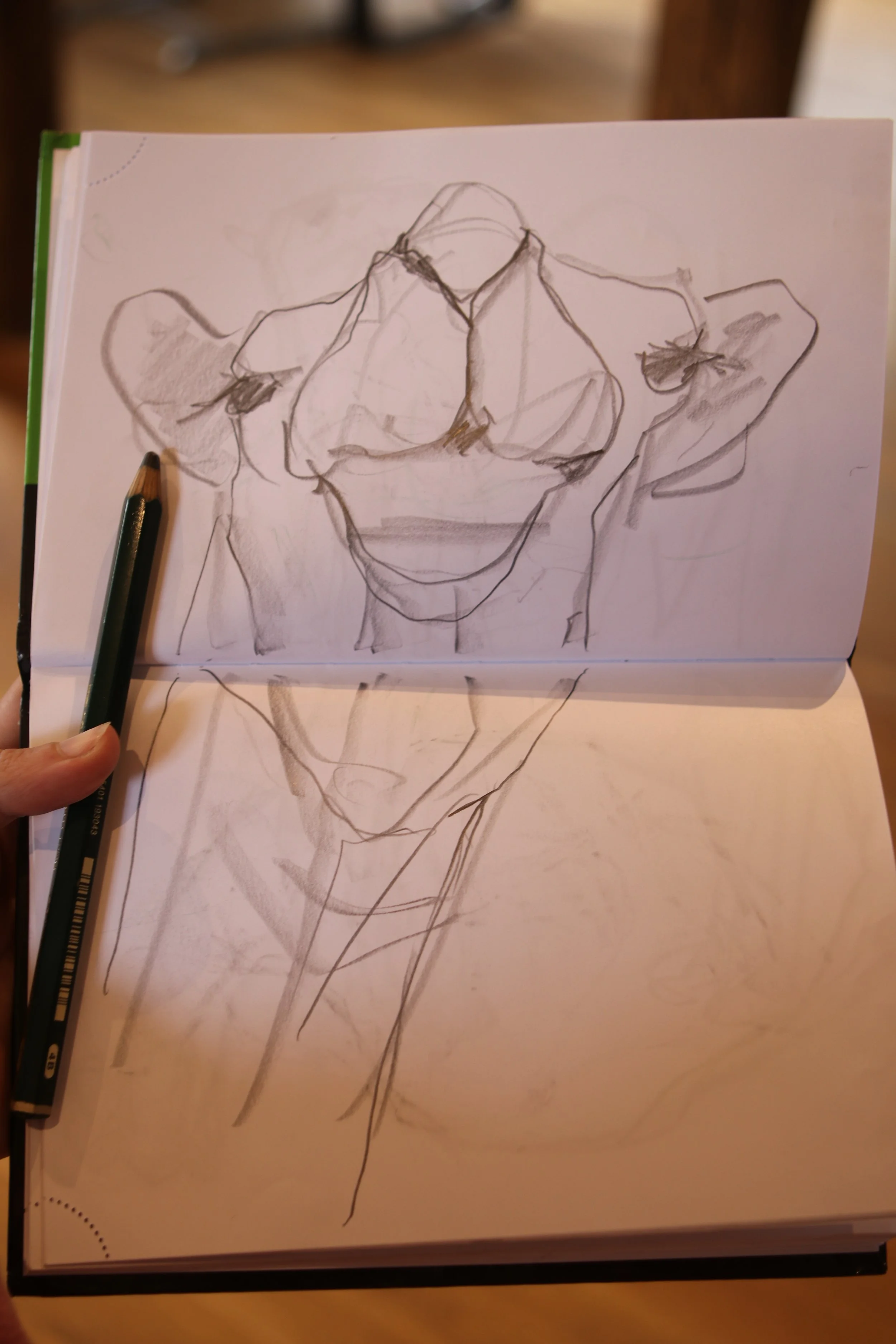
The first afternoon I spent at the camel boma. ‘Boma’ is a corral structure made from extremely thorny branches where livestock are kept at night to safekeep them from predators. This one was ladies only! When I arrived, it was just the mothers and babies as the main female herd were out grazing, but soon the others came running in, which was a noisy and exciting experience.
Quick sketches from life of camels helped me to familiarise with their features and understand their anatomy and movement. Their thick lips allow them to eat from thorny plants which dominate arid landscapes. Slit-like nostrils and double layered eyelashes protect from the sand and their padded broad feet enable them to move efficiently across sandy terrain.
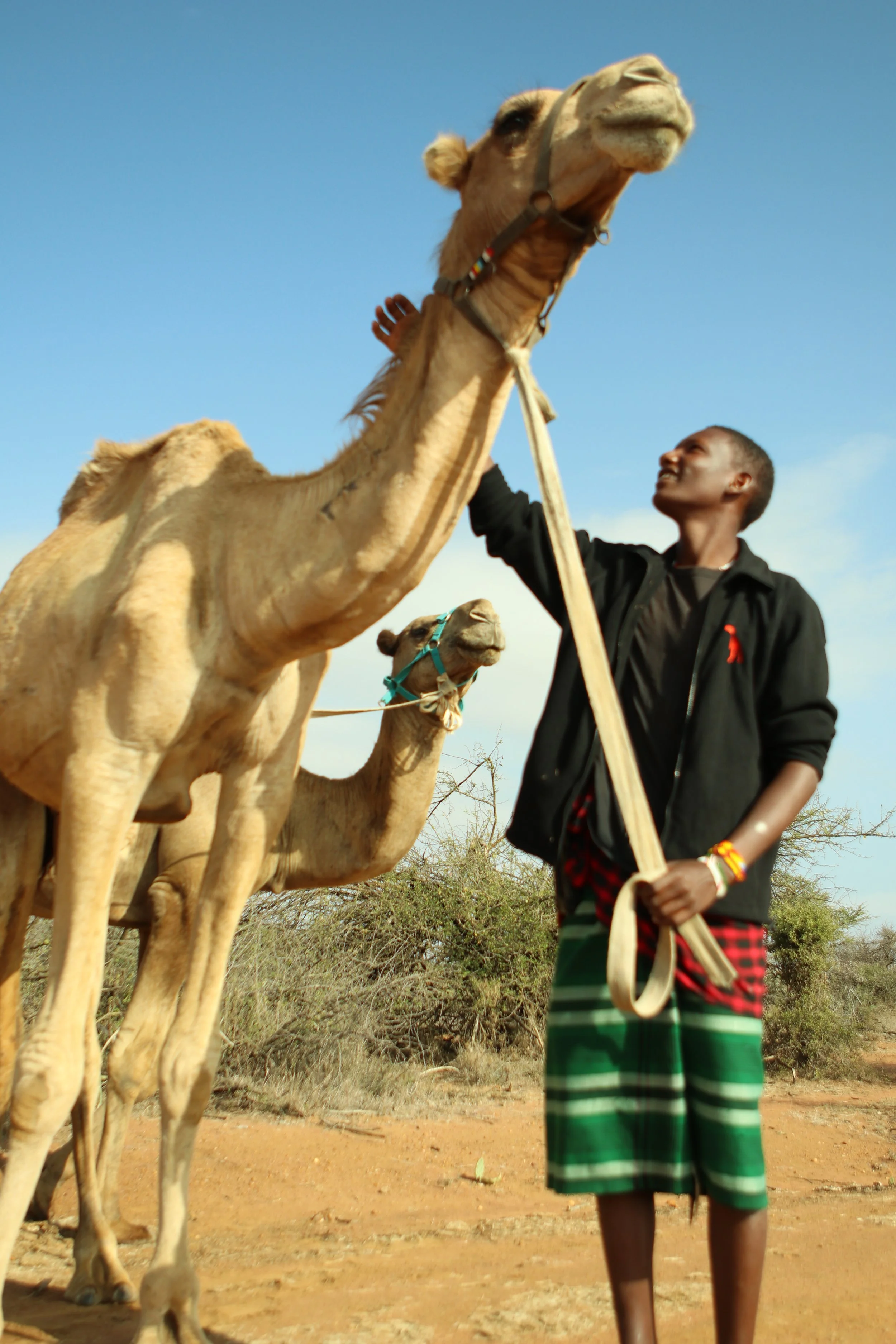
The next day I spent with a handler and two camels. Sketching, photographing and ‘getting to know’ their movement and composition. It amazed me how docile and quiet camels are, and however bizarre, they are equally beautiful!
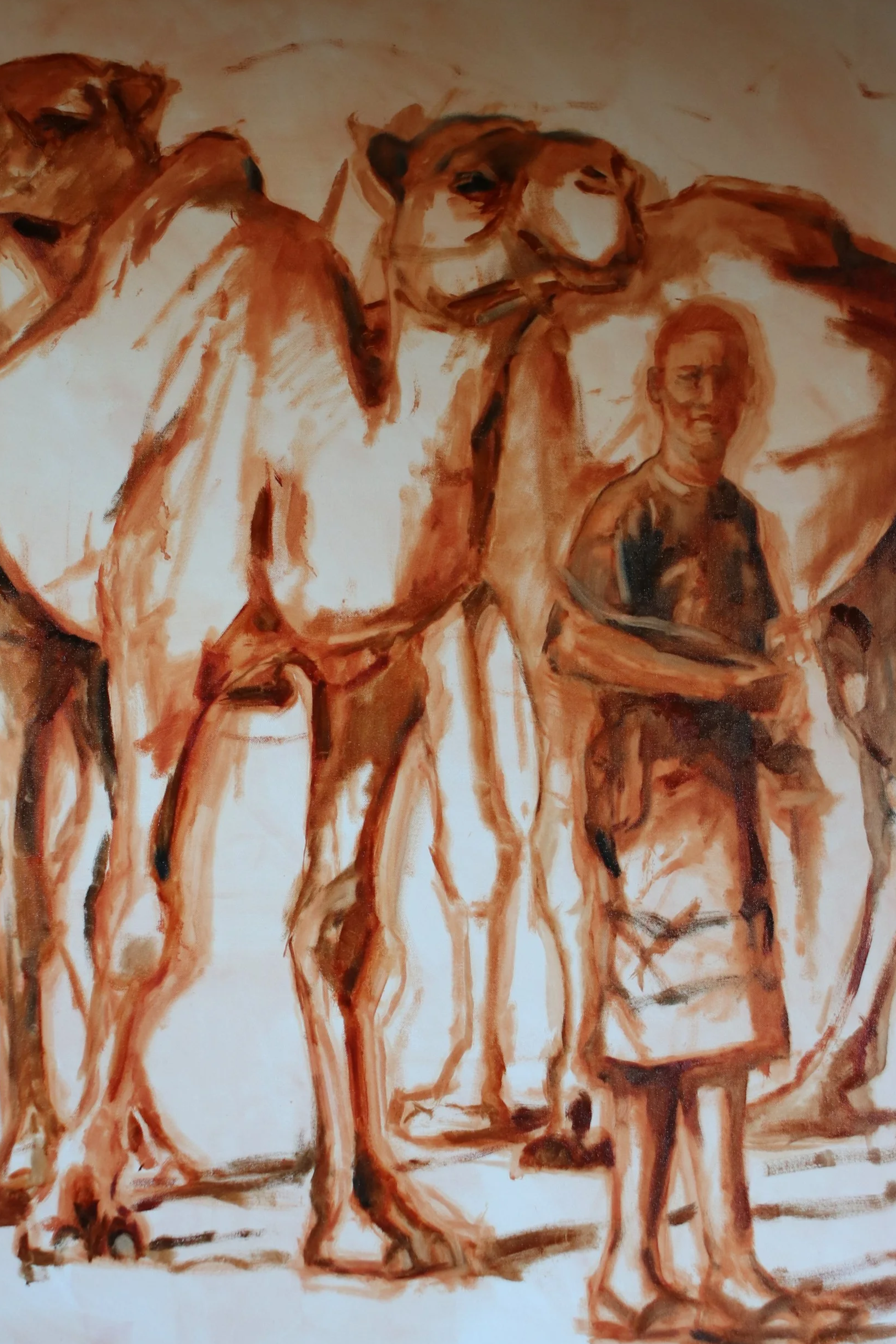
Back in the studio I prepped the 100x120cm canvas and got stuck in with a big brush marking out the big shapes. Adjusting and re-adjusting my placement until the composition and proportions were just-so!
This stage is so important and one of the most time-consuming parts of any painting… especially one with 9 legs!
Then it’s time to bring in colour! The dry desert-like environment gave a washed out feel under the hot sun, and it was important for me to incorporate the long shadows cast by the camels tall thin legs. There were few saturated colours besides the skirt and bracelet of the handler. However, as always I use a lot of colour in my paintings, so you can see blues and purples in the shaded areas of leg and belly, where richer and warmer oranges, yellows and even pinks are seen where the light hits. I hope you enjoyed reading about my camel commission in Kenya! It was a fascinating and memorable adventure.